There’s a moment in almost every wedding dress appointment where the bride looks in the mirror and says something that surprises everyone in the room, including herself.
“It’s beautiful. But it doesn’t look like me.” Every bride is beautiful, but not every beautiful wedding dress is for every bride.
This happens more often than the bridal industry wants to admit. And it happens because the industry has spent decades defining “bridal” so narrowly that millions of women can’t find themselves anywhere inside it. Strapless. Sweetheart neckline. Fitted bodice. Tulle skirt. Some combination of sparkle and structure that photographs well but moves terribly and makes the wearer feel like she’s playing a role in someone else’s production.
The women who walk away from that fitting room aren’t difficult. They’re clear. They know exactly what they don’t want. They just haven’t been shown what they do. They want a dress that captures themselves, she wants a unique wedding dress. Unique wedding dresses in bridal aren’t new, but these days with the increased copycat designs, brides are looking more closely, and are no longer limited to a me-too wedding dress from her hometown.

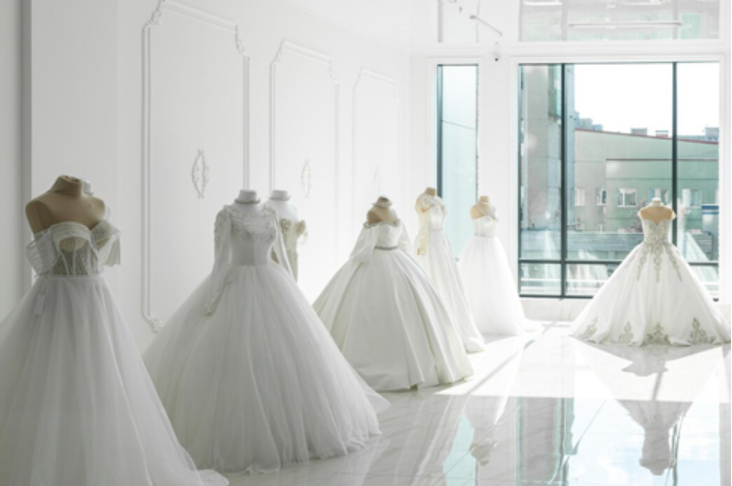
The Rise of the Unique Wedding Dress
Search data doesn’t lie. “Unique wedding dresses” as a search term has grown steadily year over year, and the women typing it aren’t browsing for fun. They’ve already been to the conventional shops. They’ve already tried on the industry’s best sellers. They’re searching because the conventional pipeline failed them, and now they’re looking for the exit.
What they find on the other side of that search is a completely different world. Independent ateliers. Made-to-order gowns. Designers who work in cotton lace instead of synthetic tulle, who hand-sew appliqués instead of gluing on crystals, who treat a wedding dress like a piece of craft rather than a unit of inventory.
This isn’t a niche anymore. It’s a migration.
What “Unique” Actually Means
The bridal industry co-opted the word almost immediately, of course. Scroll through any chain retailer’s website and you’ll find a “unique” collection that looks suspiciously like everything else they sell, just with a different sleeve or an unexpected neckline.
Real uniqueness in a wedding dress comes from three places.
First, the maker. A dress designed by a single person, someone who sketches, drapes, and sews, and carries an energy that factory production cannot replicate. You can see it in the seams. You can feel it in the weight. When a designer has touched every stage of a garment’s life, the garment communicates differently on the body.
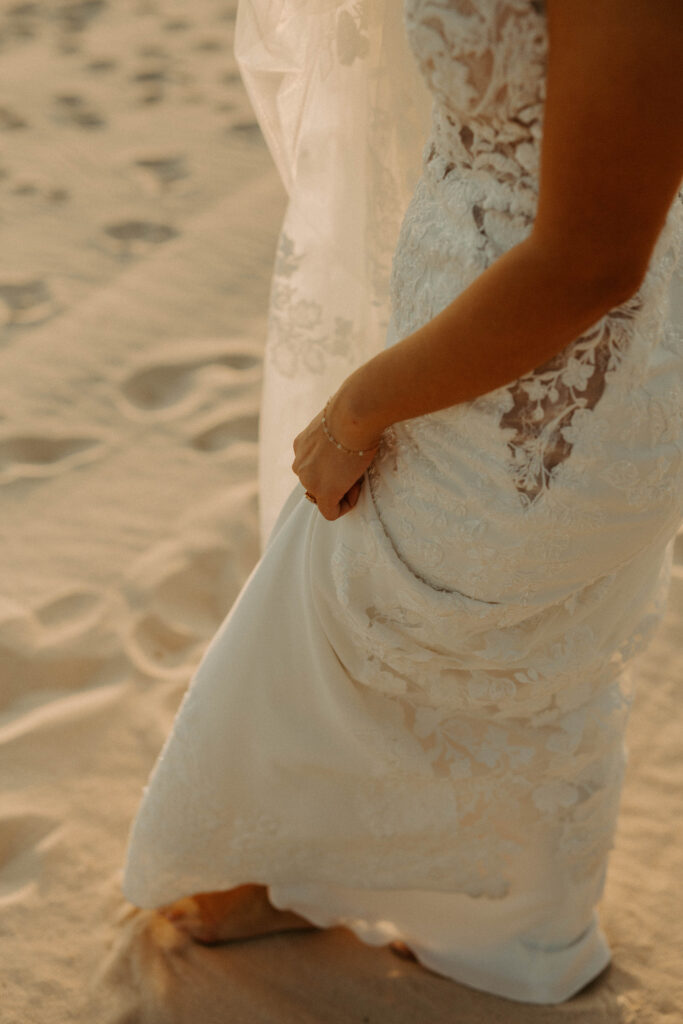
Second, the materials. Cotton lace ages differently than polyester. It softens. It breathes. It develops character over decades the way synthetic fabric never will. A bride who chooses natural materials isn’t just making a style decision, she’s making a durability decision. She’s choosing a dress that her daughter could actually wear, rather than one that disintegrates in storage.
Third, the fit. A unique dress is almost always a better-fitting dress, because it wasn’t designed to accommodate the broadest possible market. It was designed for a specific silhouette, a specific sensibility, a specific kind of woman. When the target isn’t “everyone,” the result is something that feels like it was made for you, because in many cases, it literally was.

Why the Traditional Bridal Pipeline Doesn’t Work for These Women
The conventional wedding dress buying experience was engineered for efficiency, not discovery.
You book a sixty-minute appointment. A consultant pulls dresses based on a brief conversation about your “vision.” You try on eight to twelve gowns from a curated selection that represents a fraction of what’s available. You’re encouraged to “say yes” before you leave, because the emotional momentum is highest in the first appointment and the business model depends on conversion.
For the bride who already knows she wants something standard, this works fine. For the bride who’s looking for something she hasn’t seen yet, something that matches a feeling rather than a Pinterest board. It’s a dead end.
The brides searching for unique wedding dresses have usually figured this out already. They’ve learned, through one or two disappointing appointments, that the system isn’t designed to serve their particular search. So they start looking outside it.
The Independent Designer Alternative
What they often discover is the indie designer model, small studios where the designer is present, where the collection is limited by intention rather than budget, and where the experience of finding a dress is treated as part of the creative process rather than a retail transaction.
Studios like Dreamers & Lovers represent this approach. California-based, handmade production, direct-to-bride. No department store middlemen. No wholesale markup. The woman who designs the dress is the same woman who built the brand, who selected the lace, who decided that every gown would be made in-house rather than outsourced overseas.
This model isn’t more expensive than the traditional one. In many cases, it’s less expensive, because when you remove the retailer margin, the corporate overhead, and the marketing spend required to maintain a national chain, the actual cost of a beautifully made dress is lower than most brides expect.
The Difference You Can Feel
Ask any bride who ended up in a unique gown from a small designer how it felt different from the conventional dresses she tried first. She won’t talk about aesthetics. She’ll talk about weight — how the dress felt lighter than anything she’d tried before. She’ll talk about movement, how she could raise her arms, bend down, breathe without thinking about it. She’ll talk about recognition, how she looked in the mirror and finally saw herself.
That recognition is the thing the bridal industry keeps missing. They think brides want to be transformed. The brides searching for unique wedding dresses want the opposite. They want to be amplified. They want a dress that takes who they already are and turns the volume up, rather than papering over it with someone else’s idea of what a bride should look like.
Finding Your Version
If this resonates, the practical advice is straightforward.
Stop searching inside the traditional bridal pipeline. The unique dress you’re looking for almost certainly doesn’t live in a chain store, and spending appointment after appointment confirming this will drain your energy and your optimism.
Search by designer, not by retailer. Look for small brands that make their own dresses. Read their “About” page. If the founder’s story is on the website, if you can see the designer, the hands that do the work, you’re in the right place.
And try the dress at home if you can. Many independent designers now offer wedding dress home try-on programs that let you experience a gown outside the pressure of a salon appointment. The lighting is different. The energy is different. The decision feels different when nobody’s watching you make it.
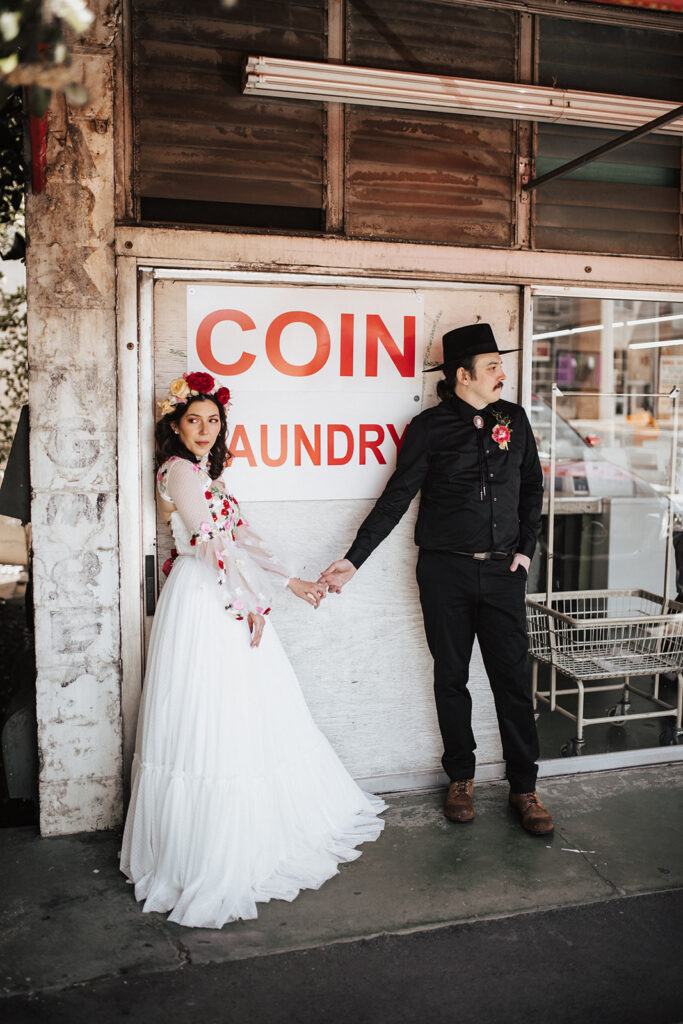
The unique wedding dress isn’t a trend or a category. It’s what happens when a bride decides that the most important thing about her wedding day isn’t conforming to an aesthetic — it’s recognizing herself.